Doctoral Research
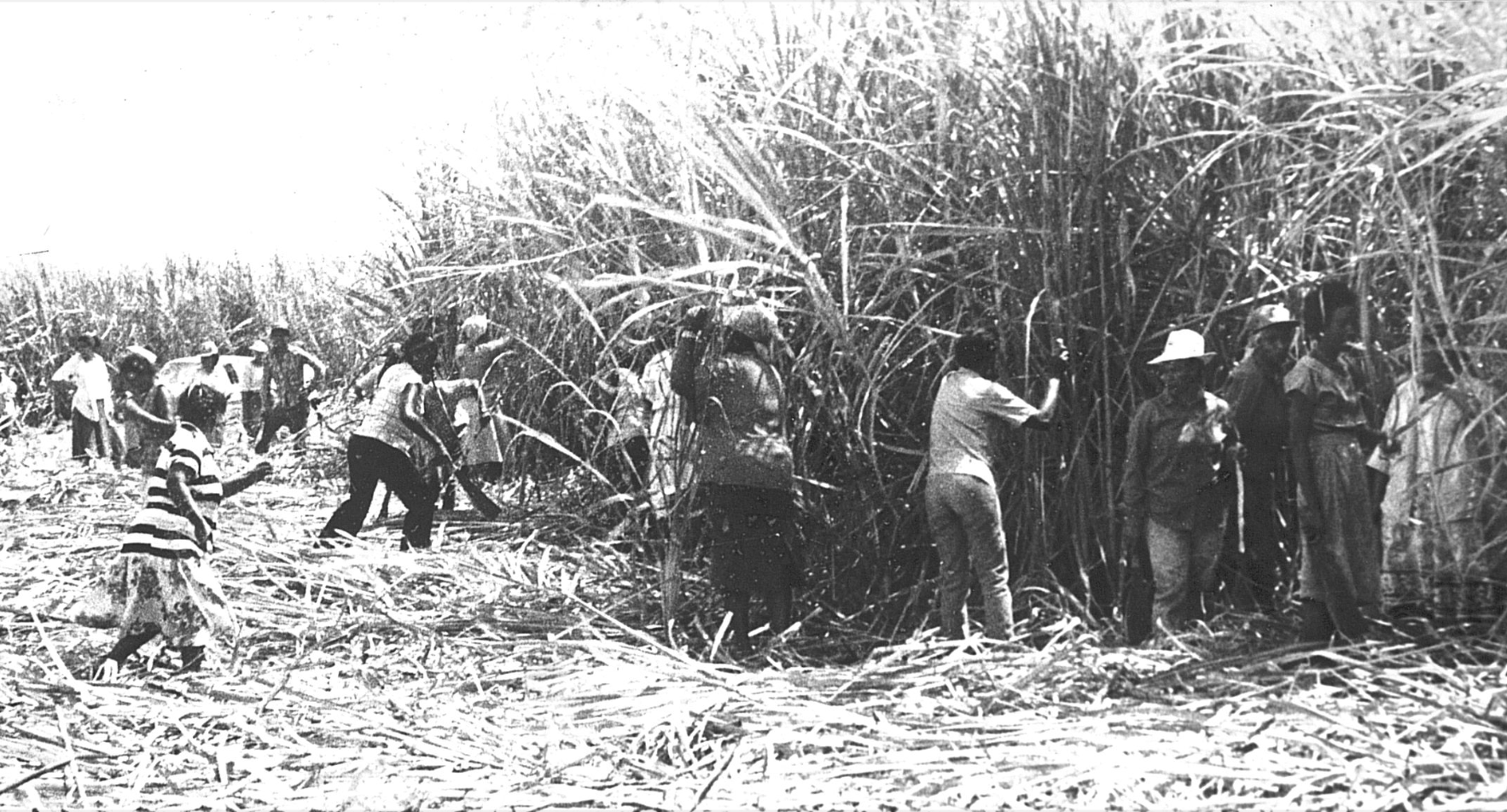
1984, Dominican Republic. Source: Archivo Naciónal de Santo Domingo.
[Image Description: A Black and white photo from the 1980s of women and children cutting sugar cane in the Dominican Republic. End Description]
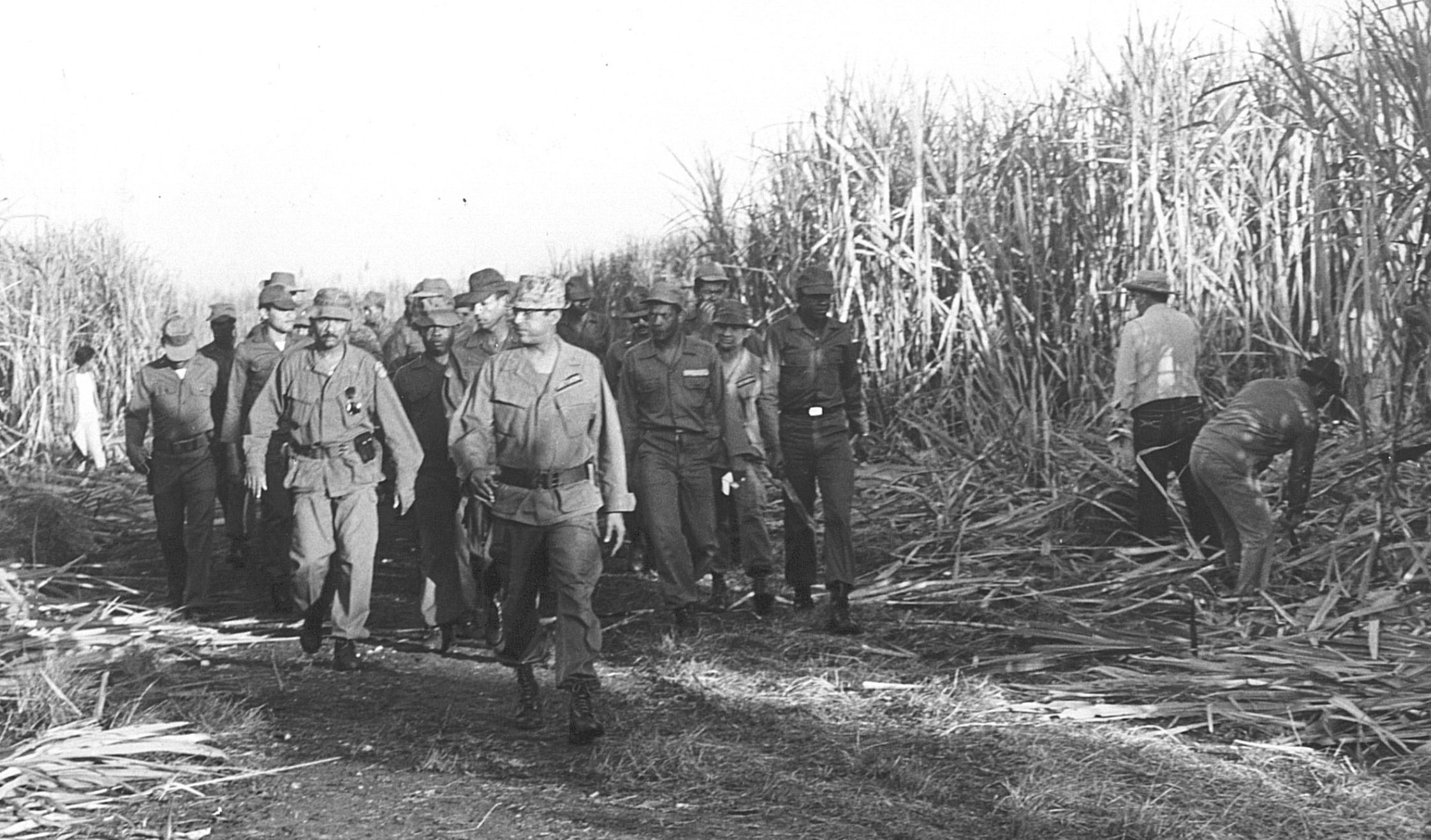
1984, Dominican Republic. Source: Archivo Naciónal de Santo Domingo.
[Image description: Black and white photo of Dominican military personnel walking through sugarcane fields while workers cut cane in the background. End Description.]
My current work analyzes Black laborers’ experiences on sugarcane plantations in the 20th century Dominican Republic and Haiti. I analyze the impact of United States imperialism on structuring environmental relations across race, gender, and ability, and how Black workers living on plantations challenge these relations to build communities of care.
I conduct literary analysis of Black Caribbean literature and multilingual archival research in Spanish, English, and Haitian Creole. In this project I closely read Erzulie’s Skirt (2006) by Ana-Maurine Lara and Dézafi (1975/2018) by Franketeyen. Through my analysis of Erzulie’s Skirt, I forefront queer Black mothers as engineers of ecological survival, imagining and implementing ecologies of care for themselves and their families. I bring a lens of care to my analysis of the zombie archetype in Dézafi and place the zombie within racialized disability and nonhuman animality. This work approaches racial capitalism through a more-than-human lens and considers a praxis of care that rejects cure temporality by refusing to abandon the disabled, nonhuman world.
My archival research draws from the Radio Haiti audio archive, Haiti’s first independent radio station. The station’s broadcast in Haitian Creole, rather than French, amplified the voices of rural working-class Haitians. I analyze testimonials of Haitians trafficked to cut sugarcane in the Dominican Republic in their original Haitian Creole, and their embodied experiences of racial capitalism through hunger and surveillance.
For my dissertation project, I have received funding through the Tinker Field Research Grant, the Foreign Language and Area Studies Fellowship, the American Association of University Women American Dissertation Fellowship, and the Society of Women Geographers. An article from my dissertation on Black mothering ecologies is under review in Meridians: feminism, race, transnationalism.
This dissertation builds on Black geographies, Black feminist theory, and critical disability studies to rethink dominant frameworks of care and survival on plantation settings. My examination of the 20th century Caribbean sugar industry reconsiders plantation temporalities, emphasizing the permeation of plantation structures in rural life after the abolition of slavery. My work demonstrates the interplay between colonial and imperial power systems, and their influence on contemporary migration crises and cultural anti-Blackness.